

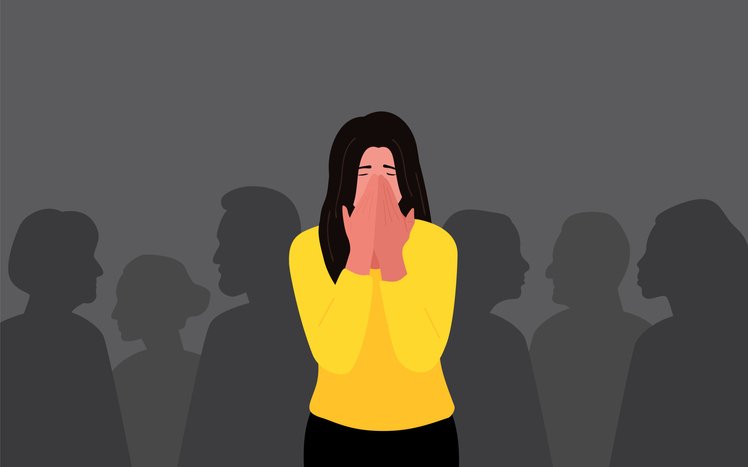
We all get nervous around other people sometimes. Maybe when “meeting the parents” for the first time, or before an important presentation. Some of us might feel shy for the first few weeks at a new job until we get comfortable with our new co-workers. These shy or nervous feelings are temporary and perfectly normal. But social anxiety disorder is different. It’s debilitating, long-term, and it can negatively affect a person’s self esteem and overall quality of life. Here’s what the research says about social anxiety disorder.
What is social anxiety disorder?
Social anxiety disorder is a mental health disorder that involves intense feelings of anxiety or fear of embarrassment, humiliation, criticism or judgment in everyday social situations. For those on the outside, the fear may not be evident. People with social anxiety are often mistaken for aloof or even angry. This is because their fear and anxiety keeps them from interacting with others in a “normal” way. They may avoid eye contact or have a rigid body posture that suggests they’re upset in some way, when in reality, they’re experiencing extreme anxiety.
Symptoms of social anxiety disorder
Social anxiety disorder is a long-term mental health disorder that can be very distressing and get in the way of a person’s career and personal relationships. The signs and symptoms of social anxiety disorder can be both physiological and psychological. The physiological symptoms of social anxiety include:
- Blushing
- Sweating
- Trembling
- Rapid heartbeat
- Chest tightness
- Nausea
- Dizziness
- Migraines or headaches
- Feelings of numbness
The psychological symptoms of social anxiety include:
- Persistent worry of embarrassment
- Intense fear of being criticized or teased
- Excessive analysis of your performance after a social encounter
- Expectation of failure in social situations
- Fear that others will notice your discomfort and anxiety
- Avoidance of being the center of attention
- Worrying for days or weeks prior to a social event
- Using alcohol or drugs to calm your anxiety in social situations
- Avoidance of places where there are other people
Many people with social anxiety avoid parties, job interviews, social experiences, dates, and conversations with people they admire, despite the fact that not participating or speaking up goes against what they want. This type of internal conflict can further impact their self-esteem and lead to depression and other mental health problems.
Treatment options for social anxiety disorder
Generally a combination of medication and psychotherapy has been the most effective for helping people manage their symptoms of social anxiety, but it often requires some trial and error before the right combination is achieved.
Cognitive behavioral therapy (CBT) has shown to be one of the most effective therapeutic approaches for the treatment of social anxiety. CBT involves understanding the interconnectedness of our thoughts, feelings, and behaviors. CBT for social anxiety aims to help patients learn to identify the thoughts behind the fears, to test them against real-life evidence, and to construct a new way to think about the situation that is more realistic, compassionate, and helpful. Exposure therapy is a type of CBT that helps the individual learn to safely and gradually engage in some of the activities they have feared and avoided. There are a number of other ways that CBT therapists use this approach, each depending on the needs of the individual.
The medications chosen depend on the patient as well. After thorough evaluation and assessment, the prescribing practitioner will decide on a pharmacological approach. The types of medications used for the treatment of anxiety include:
- Beta blockers – to block the effects of adrenaline to reduce blood pressure and treat the physical symptoms, such as sweating and shaking
- Antidepressants – to regulate serotonin and norepinephrine to address some of the physiological symptoms and psychological fears and anxieties
- Benzodiazepines – to quickly enhance chemicals in the brain that bring feelings of calm, in order to stop panic attacks
Each medication has its advantages and disadvantages. While one may work well for one person, the side effects may be too unpleasant for another. Finding the right medication also requires finding the right dosage. Some medications take weeks to go into effect, so the process of finding the right medication for social anxiety can take quite some time.
Further research is still needed to find safe and effective social anxiety disorder treatment that works for more people, without delay and with fewer side effects.
Clinical research trials help advance science and medicine. You can help too.
Synergy Research Centers is a San Diego medical research facility located in Lemon Grove, California, where we have been conducting clinical research studies for over 18 years. We are dedicated to finding solutions to diseases and disorders that afflict millions of people around the world, including social anxiety disorder. By participating in our social anxiety research study, you are helping to advance science and medicine and get us closer to the development of effective treatments for those suffering from debilitating mental and physical ailments. For more information on how you can participate, please give us a call at (888) 539-0282 or fill out our contact form today.